Questions We Hear Every Week
Every question below comes from real conversations with buyers, sellers, and homeowners throughout Southwest Florida.
Start with the topic that matters most to you.
The answers are grouped by subject so you can move through them easily without searching through one long list.

Buying a Home
Dedicated buyer FAQ hasn't been published on this page yet. Two existing resources already cover most of this ground in depth:
Guide: The Waterfront Buyer's Journey Tool: Should You Buy This House? ChecklistSelling a Home
No seller-focused questions exist on the site yet. This category is reserved for future questions about listing, pricing, and preparing a waterfront home for sale.
Start a Conversation With ChristinaWaterfront & Boating
These questions cover the practical side of life on the water — locks, bridges, tides, and what to check before assuming a dock and lift will work for your boat.
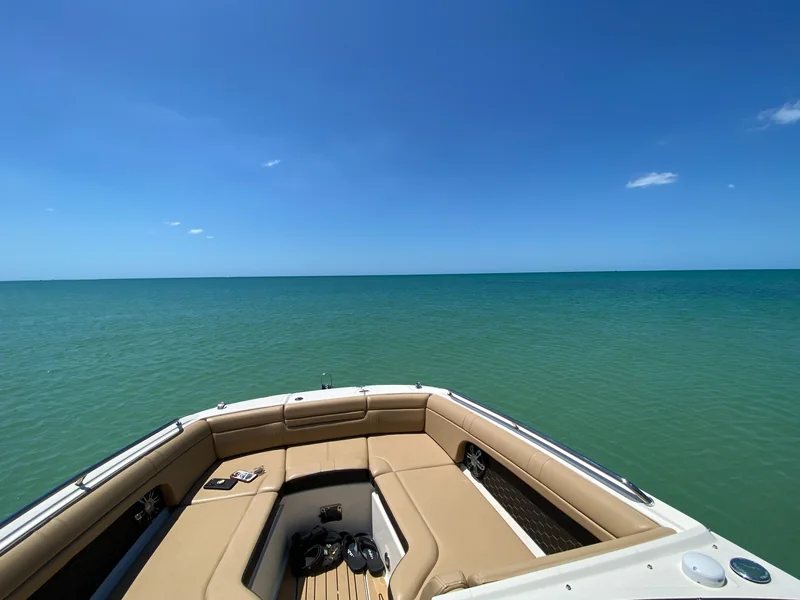
No. The Chiquita Lock was permanently removed in June 2025. It no longer exists as a functioning structure, and boaters no longer need to plan around it.
Read the full guide →No lock currently separates Cape Coral's saltwater canal system from the Caloosahatchee River. What still affects a route is bridge clearance and no-wake zones, not lock scheduling.
Read the full guide →Because they were written or last updated before June 2025. Content that still discusses lock hours, lock waits, or lock-restricted access is describing a structure that no longer exists.
Read the full guide →Yes. A property can have Gulf access on paper, but bridge clearance can still limit whether your specific boat can use that route.
Read the full guide →Travel time depends on canal location, route complexity, bridges, and idle-speed zones. Some neighborhoods offer meaningfully faster access than others — this is worth comparing property to property, not assuming by area alone.
Read the full guide →You need to compare your boat's total height with the bridge clearance along the route, including a safety margin.
Read the full guide →Yes. Water levels can affect clearance, so actual usable height may vary depending on conditions.
Read the full guide →For many boat owners, bridge clearance is just as important as location because it directly affects usability.
Read the full guide →Many do, but not all. Buyers should verify the condition, size, and weight capacity of any existing dock and lift against their own boat.
Read the full guide →Gulf Access
These questions cover what Gulf access actually means in Cape Coral, and how it differs from sailboat access, freshwater canals, and bridge-restricted routes.
Gulf access refers to waterfront homes on canal systems that allow boats to travel to the Gulf of Mexico through the Caloosahatchee River.
Read the full guide →No. Some homes sit on freshwater canals that don't connect to the Gulf at all — waterfront, but not boat-to-Gulf waterfront.
Read the full guide →Direct Gulf access means a shorter, more straightforward route to open water. Indirect access can mean a longer canal run or additional navigation factors along the route. Always verify the actual route for a specific property rather than assuming from the listing description.
Read the full guide →Sailboat access means there are no bridges between the property and the Gulf — important for taller boats and vessels with fixed vertical height that can't lower to clear a bridge.
Read the full guide →Saltwater canals are generally the ones connected to Gulf-bound boating routes, while freshwater canals are a separate, landlocked inland system.
Read the full guide →No. Some homes offer sailboat access with no bridges, while others have one or more bridges along the route.
Read the full guide →Sailboat access means there are no bridges between the home and the Gulf, allowing boats with taller height to reach open water.
Read the full guide →Neighborhoods
No neighborhood-specific questions have been published on this page yet. Browse the neighborhood and quadrant guides directly:
Guide: Find Your Waterfront Neighborhood Guide: Choose Your QuadrantCondominiums
No condominium-specific content exists on the site yet. This category is reserved for future questions about waterfront and Gulf-access condos.
Closest Guide: Tarpon Point — Upscale, Amenity-Rich Waterfront Living Start a Conversation With ChristinaFlood Insurance & Seawalls
These questions cover flood zones, flood insurance costs and discounts, and how to evaluate seawall condition before buying a waterfront home.
In almost all cases, yes. Most canal-front Cape Coral property sits in Zone AE, a Special Flood Hazard Area, where flood insurance is required by any federally backed mortgage lender. A standard homeowners policy does not cover flood damage.
Read the full guide →Zone AE covers most of Cape Coral and carries a 1% annual flood chance. Zone VE applies to Gulf-edge parcels exposed to coastal wave action, with stricter building rules and higher premiums. Zone X covers higher interior areas where flood insurance isn't federally required, though it can still flood.
Read the full guide →Cape Coral participates in FEMA's Community Rating System at Class 5, which gives property owners in A, AE, and V flood zones an automatic 25% discount on NFIP premiums, and Zone X properties a 10% discount. No separate application is required, but owners should confirm Community ID 125095 appears on their policy.
Read the full guide →New NFIP flood insurance policies carry a standard 30-day waiting period before coverage takes effect. Waiting until the days before closing to bind a policy can push a closing date back — buyers should start the flood insurance quote and binding process as soon as they're under contract.
Read the full guide →An elevation certificate documents a building's first-floor elevation relative to Base Flood Elevation (BFE). Homes elevated above BFE typically qualify for meaningfully lower premiums — often 20-60% less per foot above BFE — so a missing or outdated certificate can mean overpaying for coverage.
Read the full guide →Kick-out is when the base of a seawall shifts or slides outward, usually because soil behind the wall has eroded away and hydrostatic pressure has pushed the panel out of position. It's a structural failure, not a cosmetic one.
Read the full guide →As a general range, concrete panel seawalls typically run about $650 to $900 per linear foot, and vinyl sheet pile seawalls about $400 to $650 per linear foot, before accounting for access, permitting, and site-specific factors.
Read the full guide →Yes. Cape Coral requires a Marine Improvement permit for residential seawall repair, including engineering plans signed and sealed by a Florida-licensed engineer, along with state and county approvals before the first inspection.
Read the full guide →Often, yes, though not always. Visible cracking, leaning, gaps between panels, soil erosion at the base, exposed or rust-stained rebar, and standing water pooling behind the wall are all warning signs worth a closer look before buying.
Read the full guide →It's negotiable, like any other repair item, but a seawall in poor condition should factor directly into an offer given the cost involved. Getting a marine engineer's assessment before closing is standard practice, not overcaution.
Read the full guide →Vacant Land & Building
No vacant-land questions have been published on this page yet. This category is reserved for future questions about buying and building on a waterfront lot.
Closest Guide: Northwest Cape Coral — Room to Grow Start a Conversation With ChristinaSouthwest Florida Lifestyle
No lifestyle-specific questions have been published on this page yet. This category is reserved for future questions about life in Southwest Florida beyond the transaction itself.
Closest Guide: Our PhilosophyHome Ownership & Maintenance
These questions cover the ongoing responsibilities of ownership — rental registration requirements and the city's watering and irrigation rules.
Yes. As of January 1, 2026, Cape Coral requires annual registration for short-term rentals, vacation rentals, Airbnb and VRBO properties, and most other residential rental types.
Read the full guide →Long-term rentals (more than 6 months) cost $35 per year to register. Short-term rentals (6 months or less) cost $350 per year.
Read the full guide →No. Out-of-state property owners are required to comply with the annual registration program the same as local owners.
Read the full guide →Penalties include a $1,000 fine for the first violation, $2,000 for repeat violations, and additional penalties for ongoing non-compliance. Late renewals can also trigger further code enforcement action.
Read the full guide →Most properties follow a two-day-per-week irrigation schedule based on the last digit of the address, with specific day and time windows assigned to each digit 0 through 9.
Read the full guide →No. Watering is generally prohibited during daytime hours in Cape Coral, regardless of your assigned watering days.
Read the full guide →Yes. Some areas of Northeast Cape Coral have additional restrictions tied to the Mid-Hawthorn Aquifer, including private well irrigation limited to one day per week in certain areas.
Read the full guide →Yes. Homes on private wells, city irrigation water, reclaimed water systems, or canal-fed systems can be subject to different rules, and this varies by property even within the same neighborhood.
Read the full guide →Still have questions?
Real estate is rarely one-size-fits-all.
Every property is different, and every buyer has different priorities.
If you do not find the answer you need, we would be happy to help.